Gas Fryer
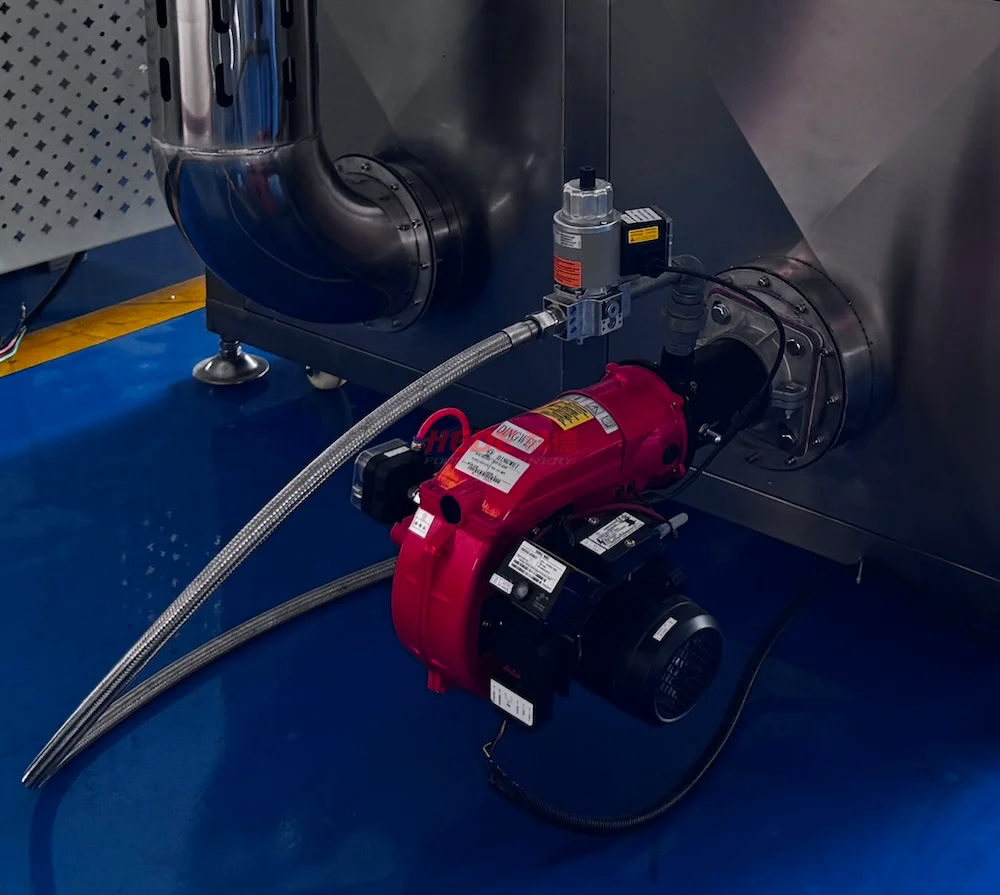
The Hede gas fryer uses a direct-fired heat exchanger for fast heating and rapid oil temperature recovery during continuous production.
It supports extended, uninterrupted operation and is suitable for food processing plants, central kitchens, and large commercial kitchens with a gas supply, meeting high-volume frying needs.
Ready to Discuss Your Frying Requirements?
Contact the Hede team for gas fryer options tailored to your food products, capacity, and factory layout.
Product Features
- Efficient Heat Transfer: The heat exchanger heats the oil tank directly, providing a short heat transfer path and efficient heat use. Oil temperature drops less during continuous feeding and recovers quickly, reducing reheating time during heavy production.
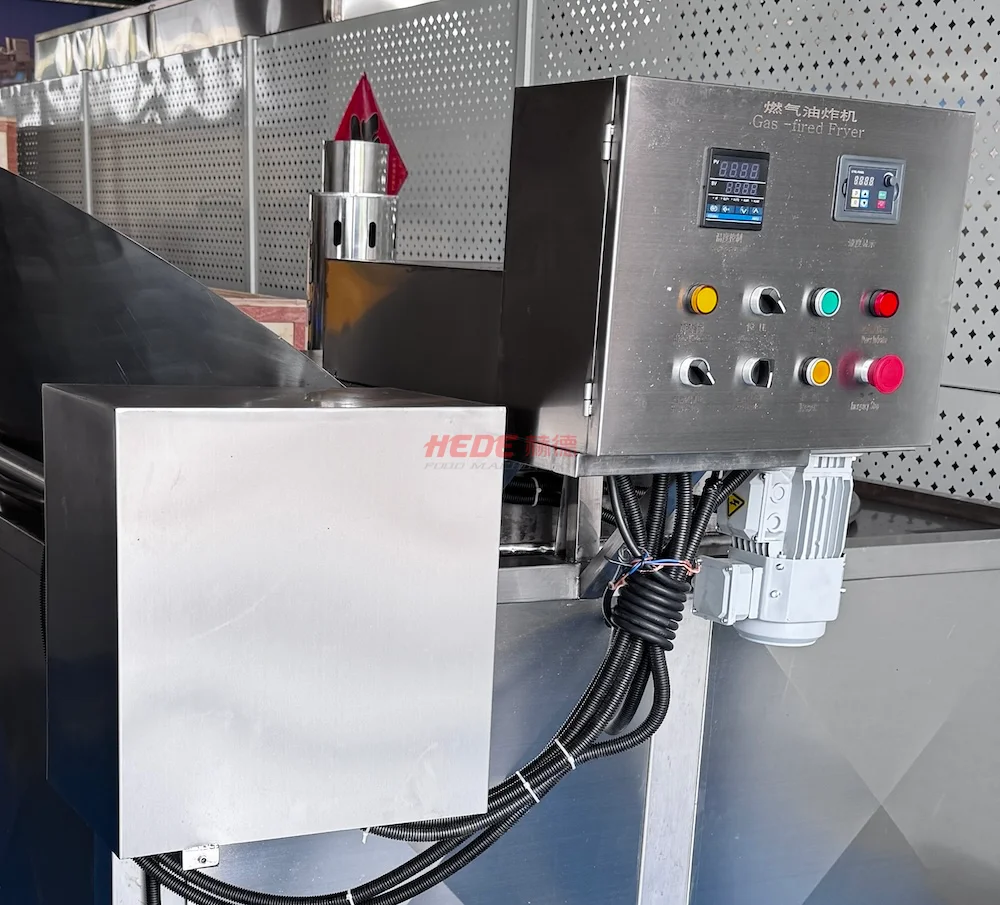
- Precise Temperature Control: Independent temperature controls and sensors monitor oil temperature in real time and keep it close to the set value. This supports different frying requirements, helping reduce burning and maintain consistent product yield.
- Stainless Steel Construction: All food-contact parts are made from SUS304 stainless steel for resistance to corrosion and oil stains. The sturdy construction supports long periods of continuous operation.
- Modular, Removable Design: Ample access to burner components, piping, and temperature controls makes routine maintenance and food residue removal easier.
- Optional: Available options include stirring, an online oil filtration system, a bottom scraper system, and automatic feeding. These features reduce manual work and help maintain consistent product color and texture for standardized production.
Safety Features
Standard safety features include:
- Flame failure protection: Automatically shuts off the gas if the flame goes out, preventing gas leakage.
- Overtemperature protection: Automatically shuts off the heat source if the oil temperature exceeds the limit.
Optional features include gas leak detection and alarms, overpressure protection, dry-heating protection, an emergency stop button, an exhaust system interlock, and fire barriers.
Frequently Asked Questions
What is the difference between a gas fryer and an electric fryer?
A gas fryer burns gas to generate heat. It heats up quickly and provides fast oil temperature recovery during continuous feeding. For facilities with a stable piped gas supply, energy costs are lower during high-volume production. However, it requires a gas supply and a professional ventilation and exhaust system, with stricter installation and inspection requirements.
An electric fryer uses heating elements immersed in the oil. It is easy to install, requires no gas supply, and provides stable temperature control. It suits facilities without piped gas or with limited installation options. However, electricity costs can be higher during long-term, high-volume production.
Gas models are preferred for continuous production in high-capacity food processing plants and central kitchens. Electric models are preferred for facilities without gas and for supermarket kitchens.
What foods can the fryer process?
It can process French fries, sweet potato fries, crispy rice snacks, peanuts, green peas, broad beans, popcorn chicken, chicken nuggets, chicken feet, meat skewers, fish products, plant-based meat, tofu puffs, stuffed lotus root slices, stuffed eggplant slices, meatballs, dough pieces, and more. Temperature and frying time can be adjusted to suit each food’s processing requirements.
How much gas does the fryer consume per hour?
Gas consumption varies with the model, burner setting, oil temperature setting, and product load. Different capacity models have different consumption rates. Please refer to the specification table for the selected model.
How much food can it process per batch or per hour?
Capacity depends on the oil tank volume, food type, frying time per batch, and feeding rate. We offer several models, from small batch fryers to large continuous fryers for production lines, covering a wide capacity range.
Does a gas fryer still need electricity?
Yes. Gas provides the heat, while electricity powers the ignition controls, temperature instruments, sensors, lifting mechanism, and optional stirring and filtration systems. The fryer cannot operate on gas alone.
Does the gas fryer support propane (LPG)?
The fryer supports LPG and natural gas heating. Built-in and external gas heating options are also available, giving customers a choice of heating arrangements.
Does the fryer include filtration, stirring, or lifting equipment?
The standard model includes automatic discharge and stirring. Online oil filtration and fully automatic feeding are optional.
- Automatic lifting: Raises the frying basket after frying for easy discharge and oil draining, reducing manual scooping.
- Stirring system: Suitable for small food pieces. It helps prevent food from sticking together, settling, and burning at the bottom.
- Online oil filtration: Continuously removes food residue during production, reducing carbon buildup in the oil and extending its usable life. It can be selected separately or as part of a complete configuration.
- Fully automatic feeding: Adds a preset quantity of food at scheduled intervals in a single batch, allowing precise control of the batch load, frying time, and temperature.
Does a gas fryer require a dedicated ventilation system?
Yes. A professional exhaust and ventilation system is required, including a Type I grease hood and exhaust ductwork. Gas combustion produces exhaust gases, while frying generates oil fumes and grease-laden vapor. Forced ventilation must remove excess heat, oil fumes, and combustion gases. It must also provide sufficient fresh air to prevent carbon monoxide (CO) buildup.
Ventilation and exhaust systems are essential for safe operation and must meet local requirements for food processing facilities, gas use, and fire safety. Exhaust airflow must match the equipment’s heat load.
What conditions are required for installation?
Installation requires the following:
- Gas supply: A stable natural gas or LPG supply, approved gas shutoff valves, suitable flexible or rigid gas piping, and a compatible pressure regulator. Gas piping must be installed and leak-tested by a qualified gas contractor.
- Power supply: Electricity for the control circuit. Automated models also require power for motor-driven equipment.
- Space: Adequate clearance around the equipment and separation from flammable materials.
- Exhaust system: An extraction hood and exhaust fan suitable for removing combustion gases and oil fumes.
- Floor: A solid, slip-resistant floor, with provisions for water drainage and oil draining.
- Gas leak detection: A gas leak alarm linked to the facility’s ventilation system is recommended.
What safety features are available?
Standard safety features include:
- Flame failure protection: Automatically shuts off the gas if the flame goes out, preventing gas leakage.
- Overtemperature protection: Automatically shuts off the heat source if the oil temperature exceeds the limit.
Optional features include gas leak detection and alarms, overpressure protection, dry-heating protection, an emergency stop button, an exhaust system interlock, and fire barriers.
How is the oil drained, and how is the fryer cleaned?
A large drain valve at the bottom of the oil tank allows oil to drain into a storage container. Stainless steel surfaces can be wiped clean with warm water and a food-grade cleaning agent.
Important: Allow the oil to cool sufficiently before draining or cleaning. Never wash the equipment directly with water while it is hot, as this may cause burns or damage the temperature controls and burner components.
What customization options are available?
Options include oil tank volume, processing capacity, equipment dimensions, stirring, oil filtration, an oil-water separation structure, and connections to conveyors. The fryer can also connect to upstream and downstream washing, blanching, battering, and cooling lines.
What does the warranty and after-sales service cover?
he warranty lasts one year from the date the equipment is delivered and accepted. During this period, the supplier is responsible for quality issues caused by defects in manufacturing, materials, or workmanship.
For covered failures of non-wear parts, the supplier provides replacement parts and repair video instructions free of charge. The buyer carries out repairs according to these instructions. Damage caused by misuse, natural disasters, or other force majeure events is excluded.
After-sales support includes technical drawings, installation guidance, commissioning and operation training, and remote troubleshooting.